Qualify second-source alloy
Tier-3 concentration traced behind two approved tier-1 suppliers for the same alloy.
Removes single-path exposure on 2 production lines
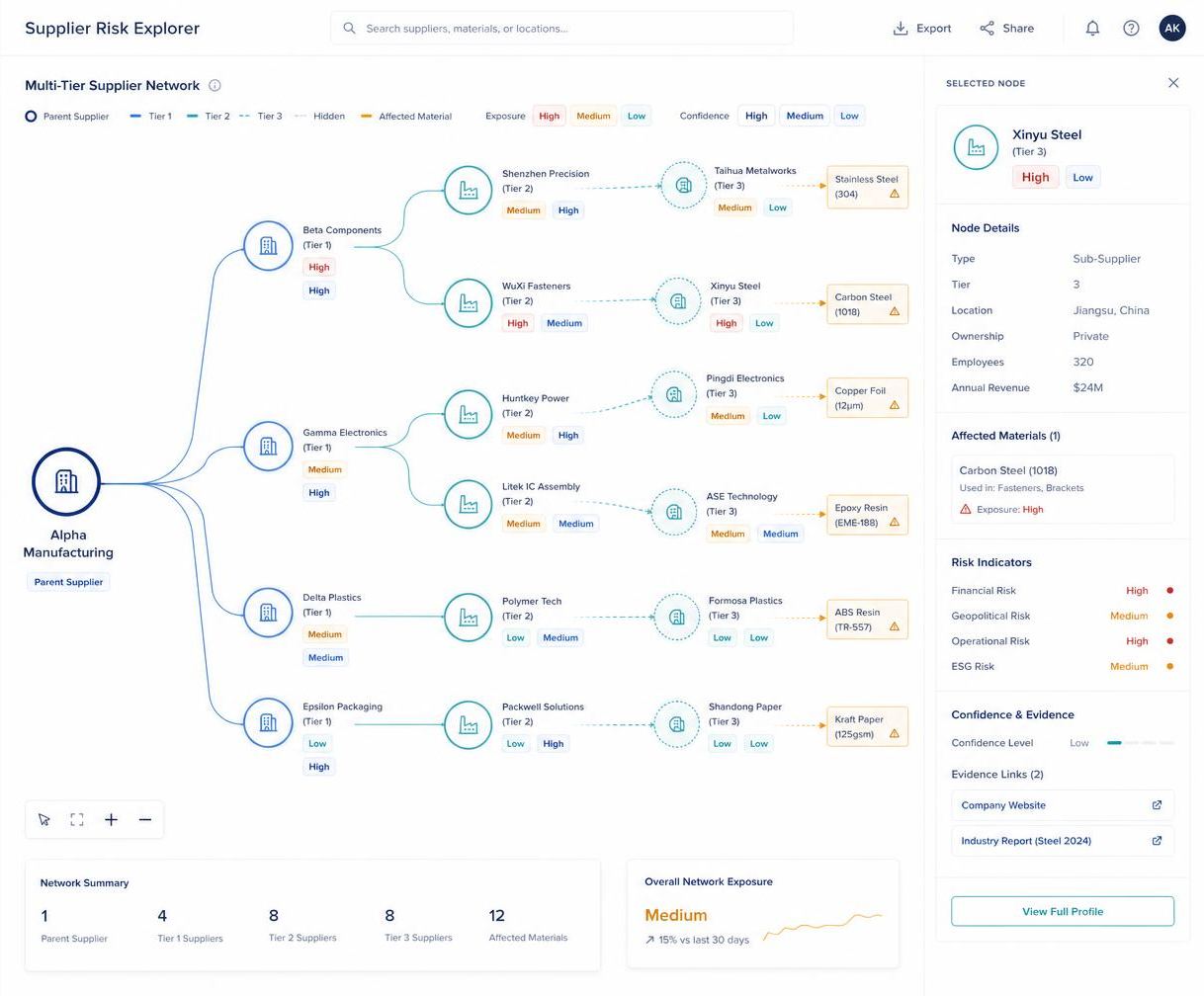
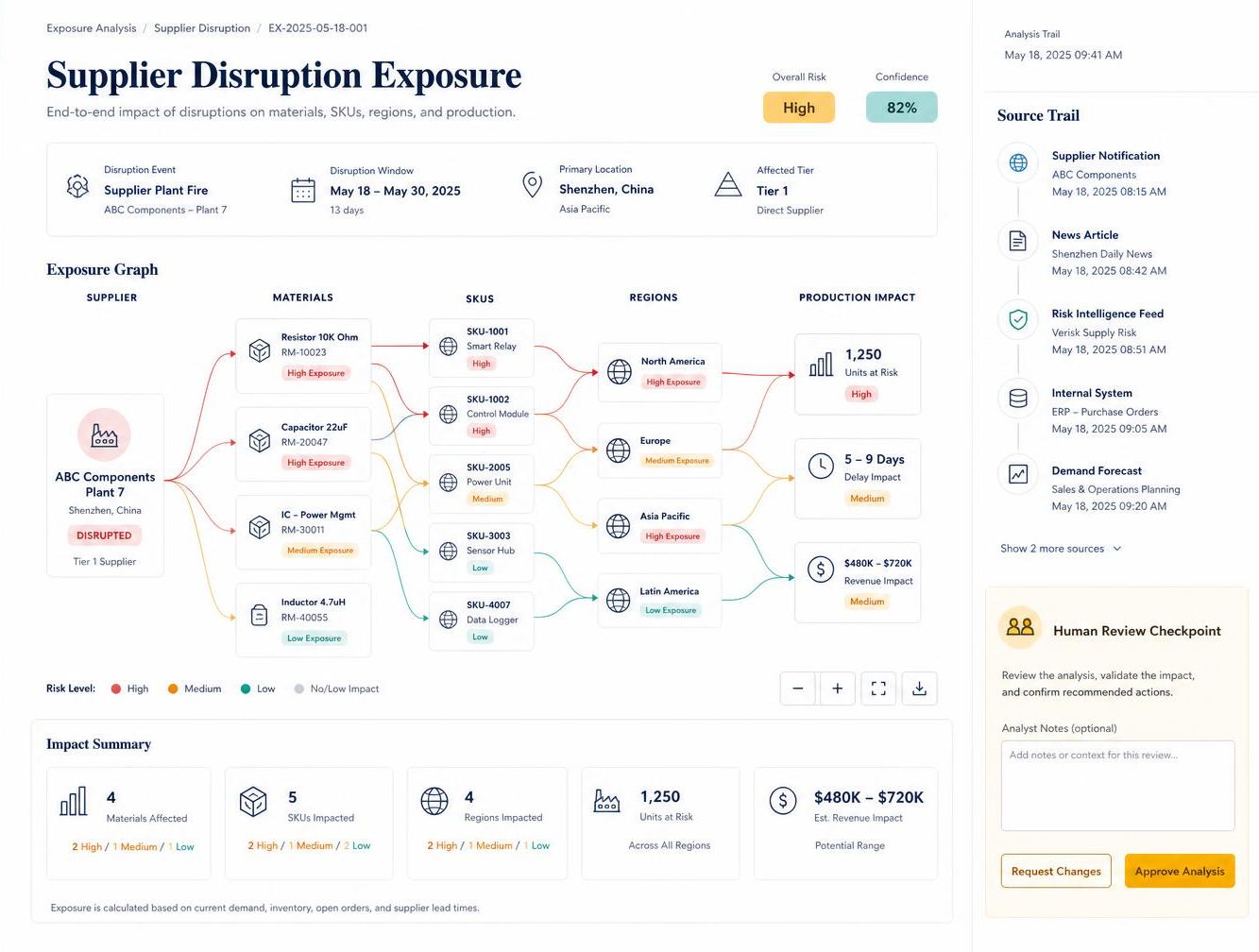
TierTrace maps tier-2 and tier-3 dependencies, connects exposure to affected materials and SKUs, and turns hidden supplier risk into source-linked actions your team can review.

Measured from internal telemetry and user action logs · Jan 2025 — Jun 2026
Two direct suppliers, one shared sub-supplier. The dependency never appears on either contract.
SUP-2841A single region, plant, or process feeds multiple approved vendors at the same time.
REG-07One alloy or polymer sits behind several finished lines with no second source qualified.
MAT-2093Certificates lapse deep in the tier structure long before anyone in procurement is notified.
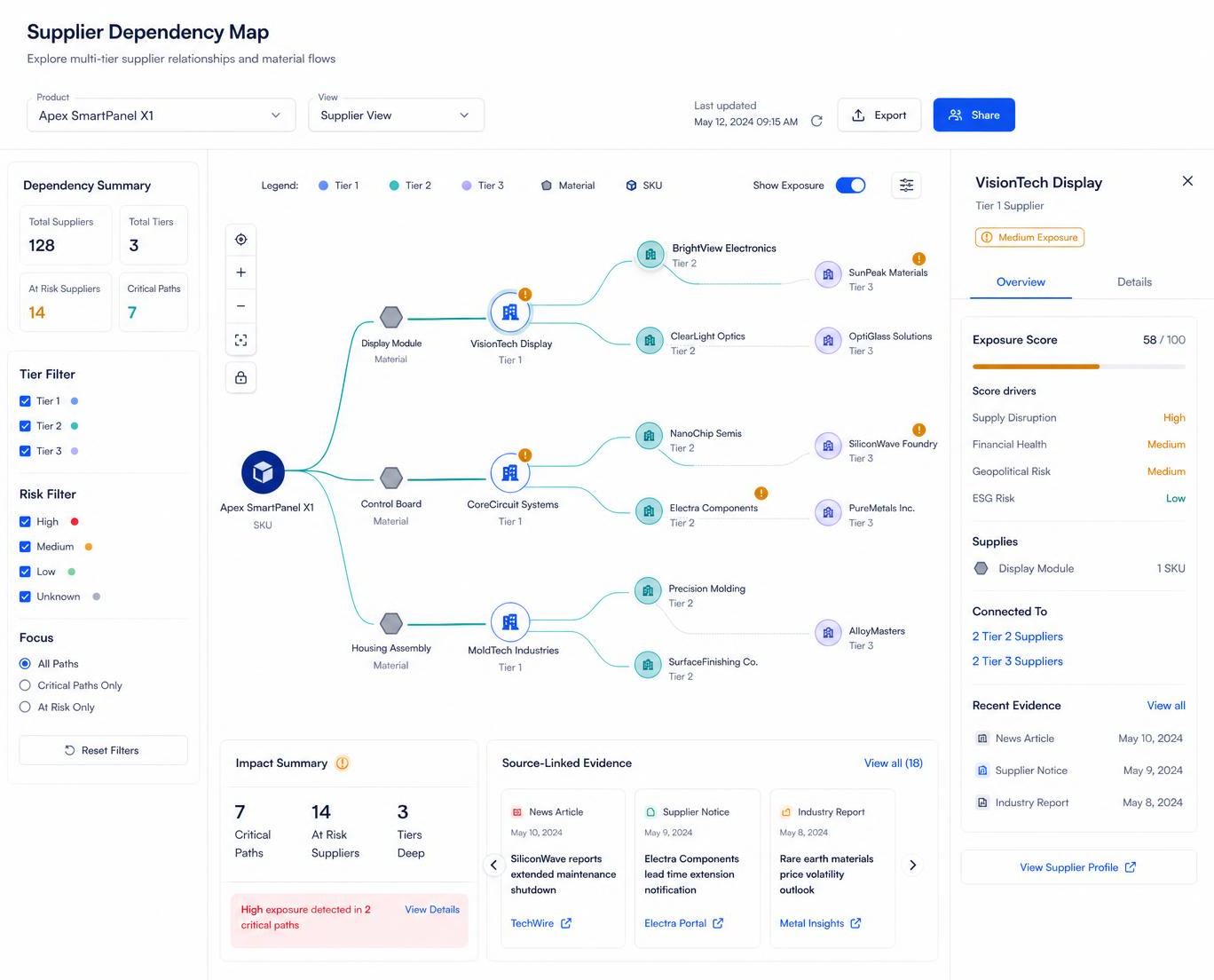
DOC-1188TierTrace maps who your suppliers depend on, where those dependencies overlap, and which materials sit behind each path — with every node traceable to its source.


TierTrace shows the path before production feels it: an external signal is linked to the suppliers it touches, the materials they feed, and the lines that depend on them.
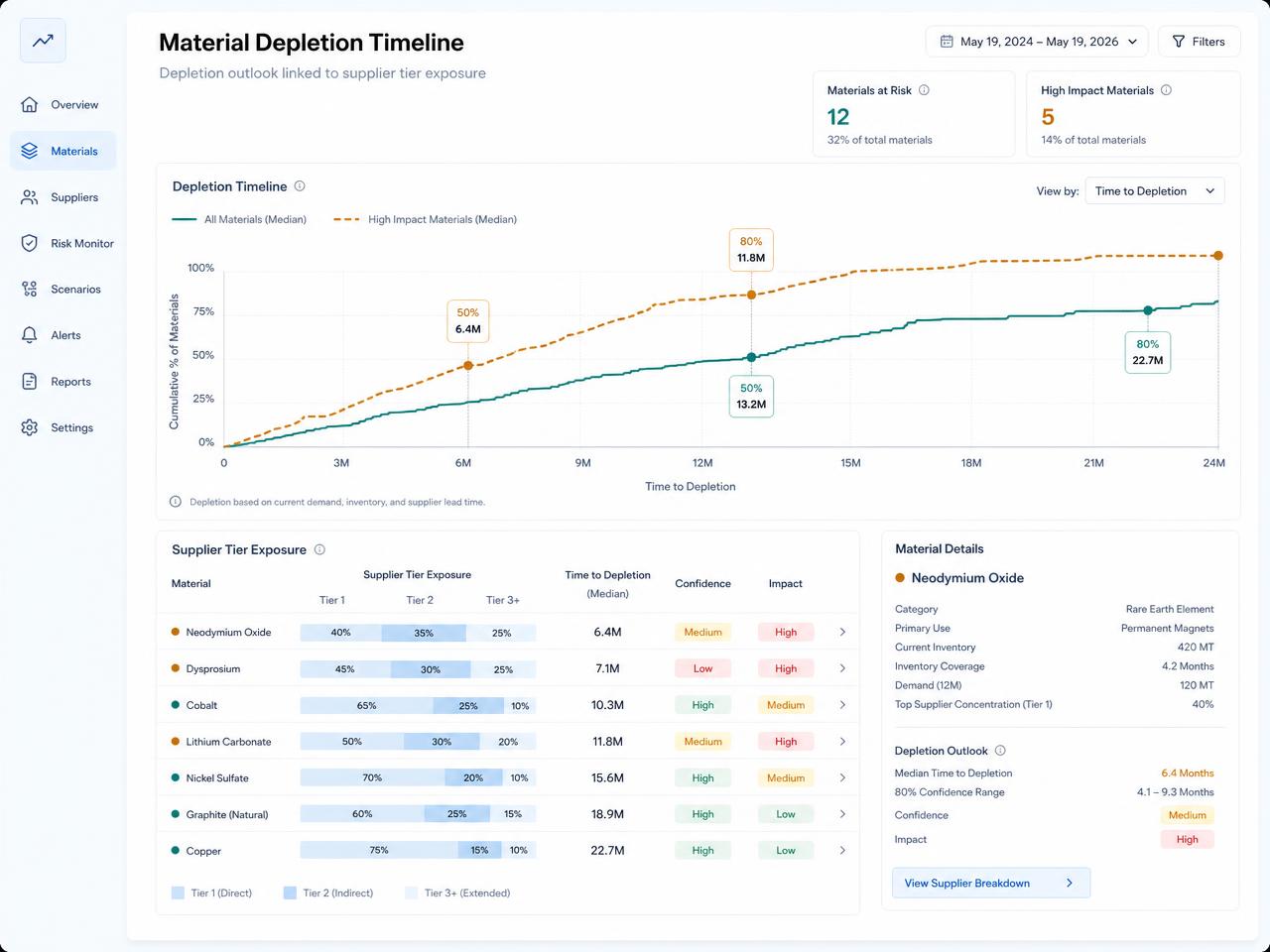
Tie each material's coverage to the supplier tiers behind it, then test how long you hold if a traced dependency stops delivering. Estimates are modelled, labelled, and reviewable.

TierTrace surfaces candidate paths around an exposed dependency and labels how confident the match is. Qualification and award stay with your team.
TierTrace does not contract, replace, or approve suppliers. Discovery is never guaranteed to be complete.
Already approved for an adjacent material
Requires sample qualification
Discovery only — evidence incomplete

Tier-3 concentration traced behind two approved tier-1 suppliers for the same alloy.
Removes single-path exposure on 2 production lines
Depletion model reaches reorder point before the traced supplier recovers.
Extends coverage from 6.4 to ~12 weeks
Compliance document expires at a tier-2 supplier feeding a regulated line.
Closes an audit gap before the next review cycle
“The invisibility of our sub-tier network was a systemic risk we couldn't quantify. TierTrace didn't replace our sourcing team, but it eliminated the two-week lag in identifying where our actual exposure lived during the Q1 logistics bottlenecks.”
Methodology: Timestamp comparison between external signal ingestion and internal risk-flag generation.
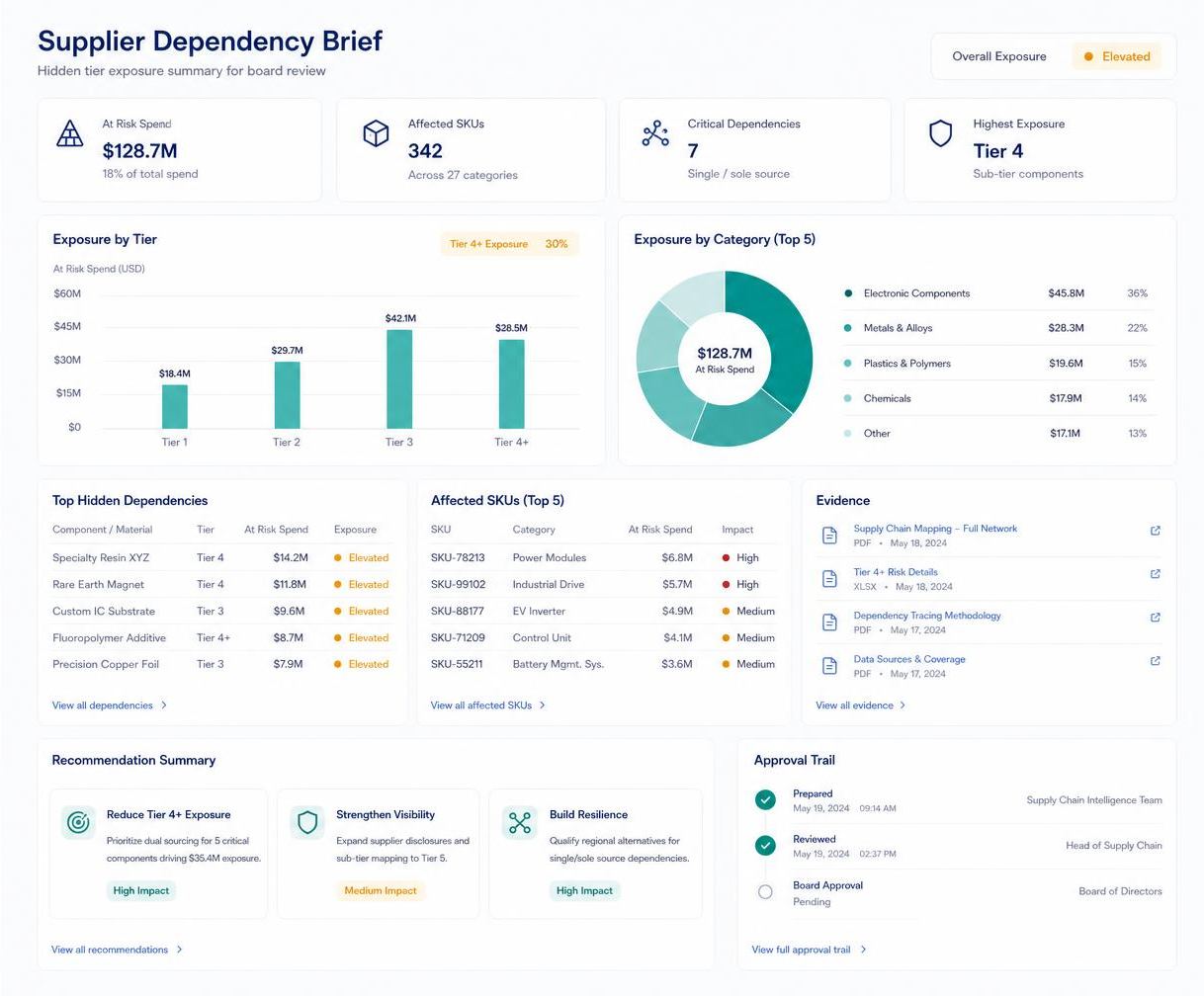
A dependency summary your leadership can read in three minutes — what changed in the tier structure, what it exposes, and what your team decided to do about it.
See what's inside
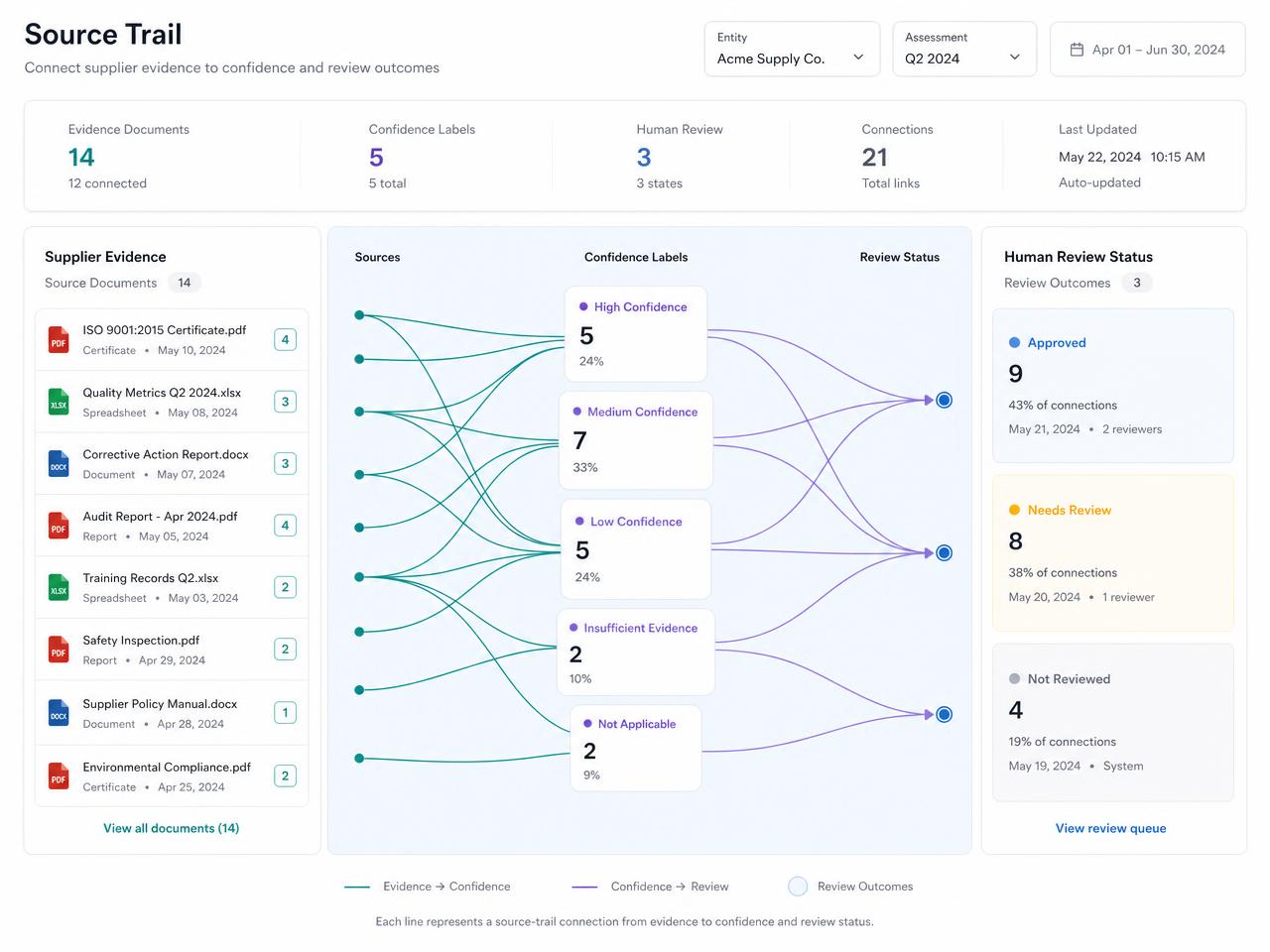
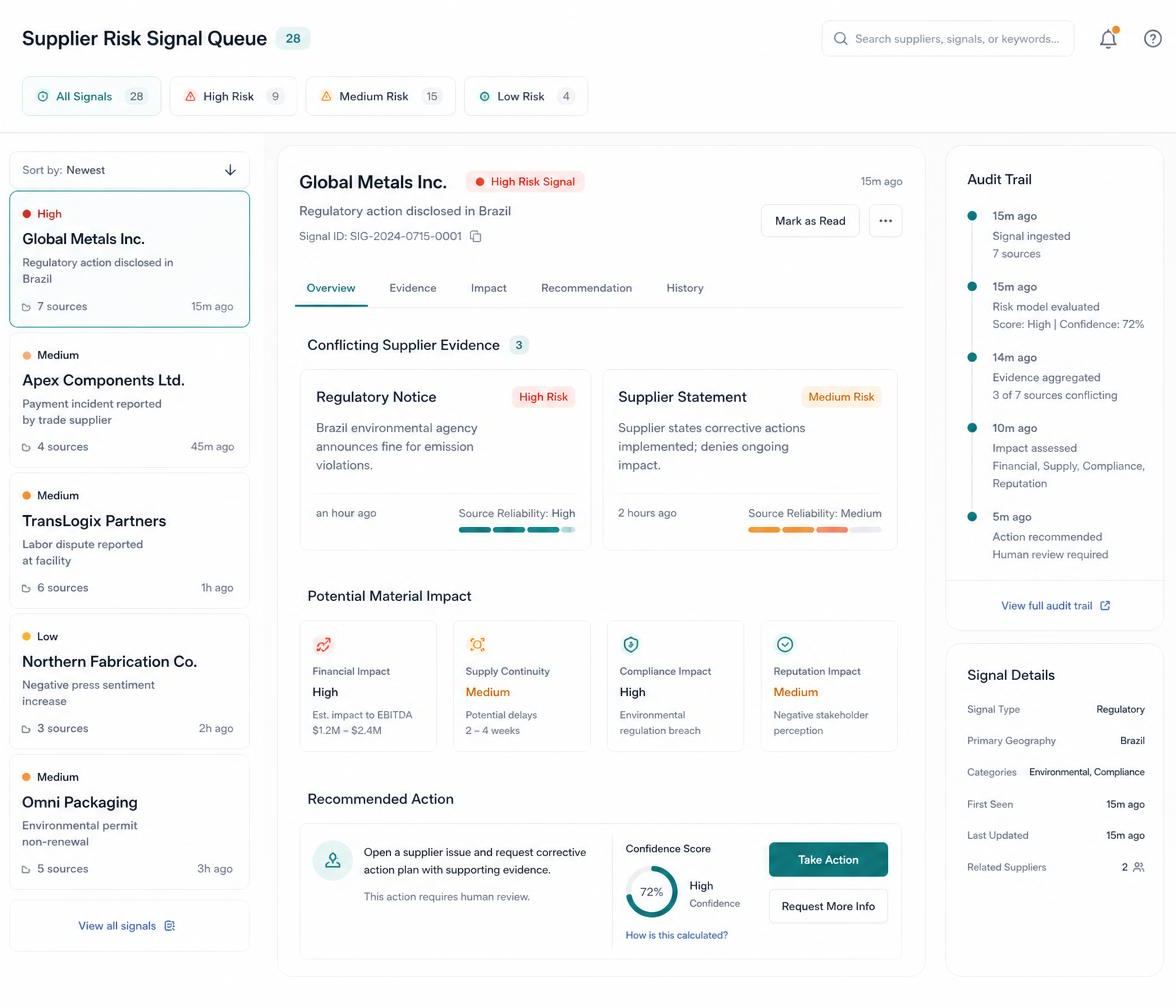
TierTrace maps supplier dependency and prepares source-linked recommendations for human review. Every signal includes affected objects, confidence, rationale, and business-impact context.
Every dependency, signal, and score links back to the evidence it came from.
Modelled estimates are labelled as estimates — high, medium, or low confidence.
Actions sit in review until a person on your team accepts, edits, or rejects them.
TierTrace never contracts suppliers, reroutes shipments, or approves purchase orders.
TierTrace does not automatically replace suppliers, reroute shipments, approve purchase orders, or guarantee discovery of every hidden dependency.
Smaller procurement teams starting supplier-tier visibility.
Teams managing hidden tier exposure across active categories.
Multi-site operations and strategic sourcing teams.
Complex multi-entity supplier networks.
Save 15% with annual billing. Start with a guided dependency map before expanding to a full supplier graph.
Bring a supplier list or BOM. We return your first tier map and the hidden exposures behind it — reviewed by your team, not decided for them.
TierTrace does not reroute shipments, approve purchase orders, or make compliance decisions automatically.